
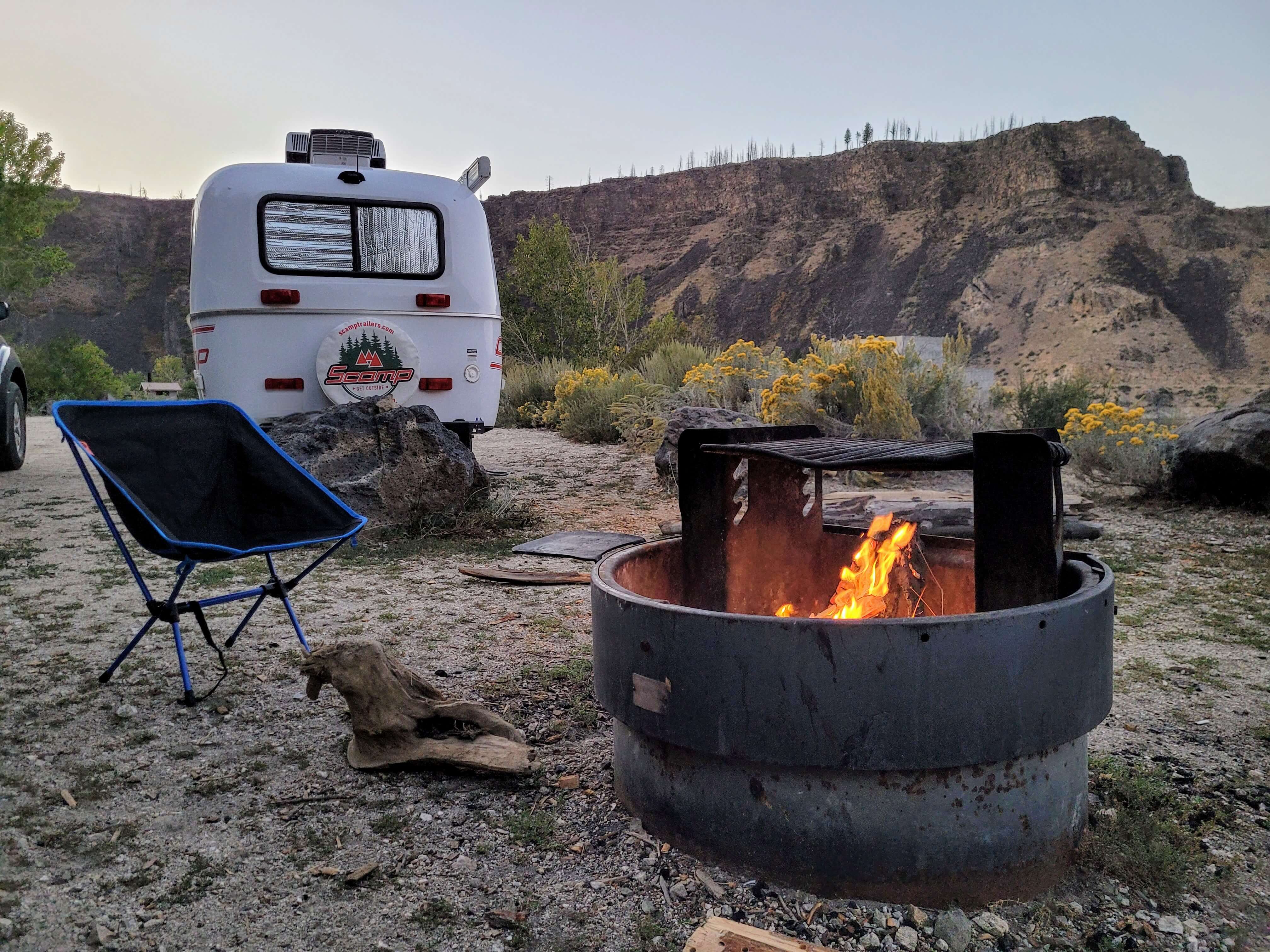
Have you ever wondered how Vanlife influencers find such picturesque locations? Are you finding yourself relegated to campgrounds with full hookups and unsure how to make it work off grid? Are you putting off a big adventure due to reservations filling up too far in advance?
You don’t have to let convention deter you. My family and I regularly travel across the country in the dead of summer without reservations, without a generator, and without hookups. We stay cool without AC and get to spend time enjoying stunningly beautiful places. This is how we pull it off.

BEATING THE HEAT
DRIVE WHILE IT’S HOT, BLOCK OUT THE SUN, AND CAMP HIGH
Our 13-foot Scamp is not equipped with a generator, which means unless we have a 30amp connection, our roof AC unit is unusable. Yet, traveling with dogs means that keeping it a safe temperature inside the Scamp is always one of our highest priorities.
We tackle the relentless summer heat with a combination of:
- Cutting reflectix to fit in every window and roof vent in the Scamp to keep as much sunlight out of the interior as possible while traveling during the hottest portions of the day.
- Cooling the Scamp interior after sundown with low power draw USB fans.
- Insulating the Scamp floor to prevent heat that radiates off the hot asphalt road from entering the trailer.
- Picking out camping locations at higher elevations where the air is naturally cooler and nighttime breezes circulate cold air through open windows.
- Utilizing solar panels and a solar generator to supplement our power needs.
USING REFLECTIX TO KEEP HEAT OUT & USB FANS TO CIRCULATE COOL AIR IN WINDOWS

It is much easier to keep heat out of the Scamp than it is to let the sun in and try to cool things down again without the roof AC unit.
Cutting reflectix to fit all the windows, vents, and roof fan, then putting it in place as soon as the sun rises blocks out a large portion of sunlight. Keeping the light out drastically reduces the amount of heat that accumulates. The tremendous difference reflectix can make is demonstrated in this video.
However, there comes a point on hot summer travel days at sea-level when the heat rises, and even the best insulation can only do so much. That’s when we batten down the hatches and get ready to drive through the heat of the day. We drive until after the sun sets or until we reach higher elevations. Then we open all the vents and windows to allow cool air to move into the Scamp. The trailer battery can easily run USB powered fans, so we clip 2 near opposing windows pointing inward to help draw cool air in. We set the roof fan to push air out. This combo quickly draws cool air in through the windows while the roof fan pulls all the rising hot air out of the top of the trailer. It is a very low power way to cool the Scamp’s interior within 30 minutes.
INSULATING THE FLOOR
Really hot days cook roadways and the heat that radiates off asphalt can warm the Scamp’s floor. That heat will transfer into the trailer’s interior. To combat this radiant heat we have lined our Scamp floor with, you guessed it, reflectix. Since reflectix isn’t fun to walk on we have cut gym floor foam pieces to fit the entire surface area of the Scamp floor. This includes the flooring below the bed area. We place the foam on top of the reflectix to give us a nice cushy surface for our feet.
The combination of the reflectix and foam add significant R-value to the bottom of the Scamp. Having insulation on our floor year round keeps heat out in the summer and helps trap warmth inside the trailer during the winter. It makes a huge difference.
Something to note with this system however, is that condensation can get trapped between the insulation and the floor. It is wise to remove it periodically to check for and mitigate moisture. I adhered the back of my foam pieces together with duct tape to make removing and reinstalling easier.
FINDING PLACES TO STAY

Probably one of the most intimidating obstacles in planning a cross-country road trip is figuring out where to stay. National Parks seem to be everyone’s first instinct, but reservations can fill up a year in advance. Additionally, dogs are only allowed in campsites or along paved paths, which is very limiting.
State Parks and RV parks also book up really far in advance, so trying to book every single campsite ahead of time would keep us on a very strict schedule without any wiggle room. Having a strict itinerary doesn’t allow time for mishaps, exploring unexpected finds, and can make for a really stressful trip. That’s not how we like to roll.
FOCUS ON FLEXIBILITY
In this video (shot in my previous RV) we left Pittsburgh PA in June and headed west. We knew there were a lot of low-lying states that promised scorching temperatures ahead of us. We gave ourselves 3-4 days to get from Pennsylvania to Colorado, where the mountains promised higher elevation camping and cooler temperatures. Until then, to keep cool along the way, we’d have to be driving while the sun was up so we could use our vehicle’s cab AC to beat the heat.
So, instead of trying to pre-plan campsites to sleep in and stressing about sticking to an itinerary, we focused on flexibility. We simply drove until we were tired after sunset when it was cool enough to stop. We would plug “rest stop” into our GPS an hour or so before we felt like stopping and pull into one for the night. Highway rest stops have bathrooms open all night and places to exercise/empty the dogs. Some even have free water filling stations and septic dump sites. You are allowed to rest as long as you need in most states, just don’t camp out (i.e., don’t bust out the camp stove and camp chairs.)
Rest stops provided us with a level spot to sleep for the night and a few amenities. We could exercise the dogs again in the morning, have breakfast, and hit the road before it got too hot. They also make for great lunch break spots since most have shade from trees or small shade structures.
THINK OUTSIDE THE BOX
When it is time to find places we actually want to camp and spend a few days, we have to get creative. We let our hobbies be our guide. My wife and I love to hike, and I love to fly fish. So, in the fledgling planning phase of a trip, I simply Google, “best hiking in…” or “best fly fishing in…” and insert a state or area we want to explore.
I take suggestions from Google and do a deep dive into areas that catch our attention. If a hike, river, or lake looks like something worth visiting, I take a look at the specific area in the Gaia GPS App.

Even though the app is designed for hiking, it is a wealth of information. It displays campgrounds large and small, their elevations, other points of interest, and hiking trails to worthy side trips like hot springs. Best of all, it can be used to navigate to each location offline and without cell phone reception. You just need to download maps of the area in the app ahead of time while WiFi is still available.
Armed with information gleaned from Gaia, I jump back to Google for more research on fees, amenities, regulations, and access roads. It is with this system that I have found locations that have become my favorite places to camp. Best of all, they are lesser-known spots that are first come, first served. No reservations required! We stay as long as allowed or a little as we like.

Worried we might drive all the way out to one only to find the campgrounds full, I use the Gaia app to scout out places with several camping and boondocking options in close proximity. We have been able to find a spot for us to stay every single time we’ve used this formula.
BOONDOCKING
Samping without hookups is otherwise known as dry camping, wild camping, or boondocking. It is a particular way of getting by without water and electrical connections. It takes practice and deserves a whole in-depth post of its own. Boondocking without a generator can be even more complicated.
We rely on solar panels to keep our trailer battery charged and utilize our solar generator to power things like, string lights, a toaster, our magic bullet, a dehumidifier, and recharge our devices. We use solar powered lanterns for interior and exterior lighting to help us limit our trailer battery usage on longer-term stays. And when the weather won’t support solar charging, we plug our Scamp right into the solar generator to top off the trailer battery if needed.

BOONDOCKING PREPARATION
Before heading off the grid to go remote camping we:
- Fill the freshwater tank
- Empty the black and gray water tanks
- Fill the propane
- Stock the refrigerator
- Pack plenty of extra drinking water
Boondocking successfully takes practice, and it takes getting to know your Scamp’s capabilities. You also need to get familiar with your water and power usage. Practicing close to home a few times before going too remote is always wise.
To see in-depth information on all the equipment we use to make boondocking easy check out my post on Camping Gear that Elevates the Experience

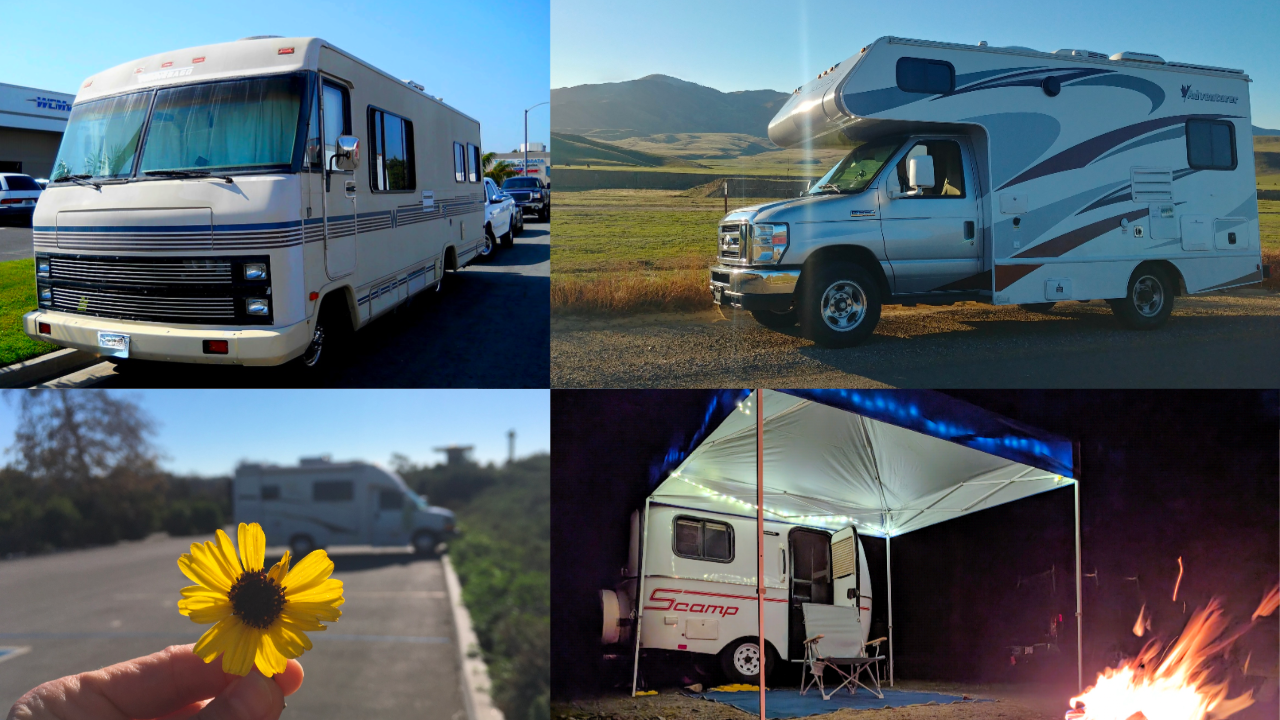
To help you better understand the difference between having full hookups and camping without them, I’ve filmed this video in my previous Class C RV:
SAFETY
I hope this peek at how we do things helps you create your own epic adventures.
Comment below with any questions. If you enjoyed this post, please check out my others as well. Stay wild my friends!

If you found value in this post, please consider using Buy Me A Coffee as a tip jar to help support more content.


OR this post contains affiliate links. Purchases made through them will help fund more content at no extra cost to you. Thank you so much for your support.


Leave a Reply